
The promise of sale: what a Malta buyer signs before the deed
In Malta the deal is fixed months before the deed, by the promise of sale. This is what the law says it does, how long it lasts, and which documents must already exist when you sign it.
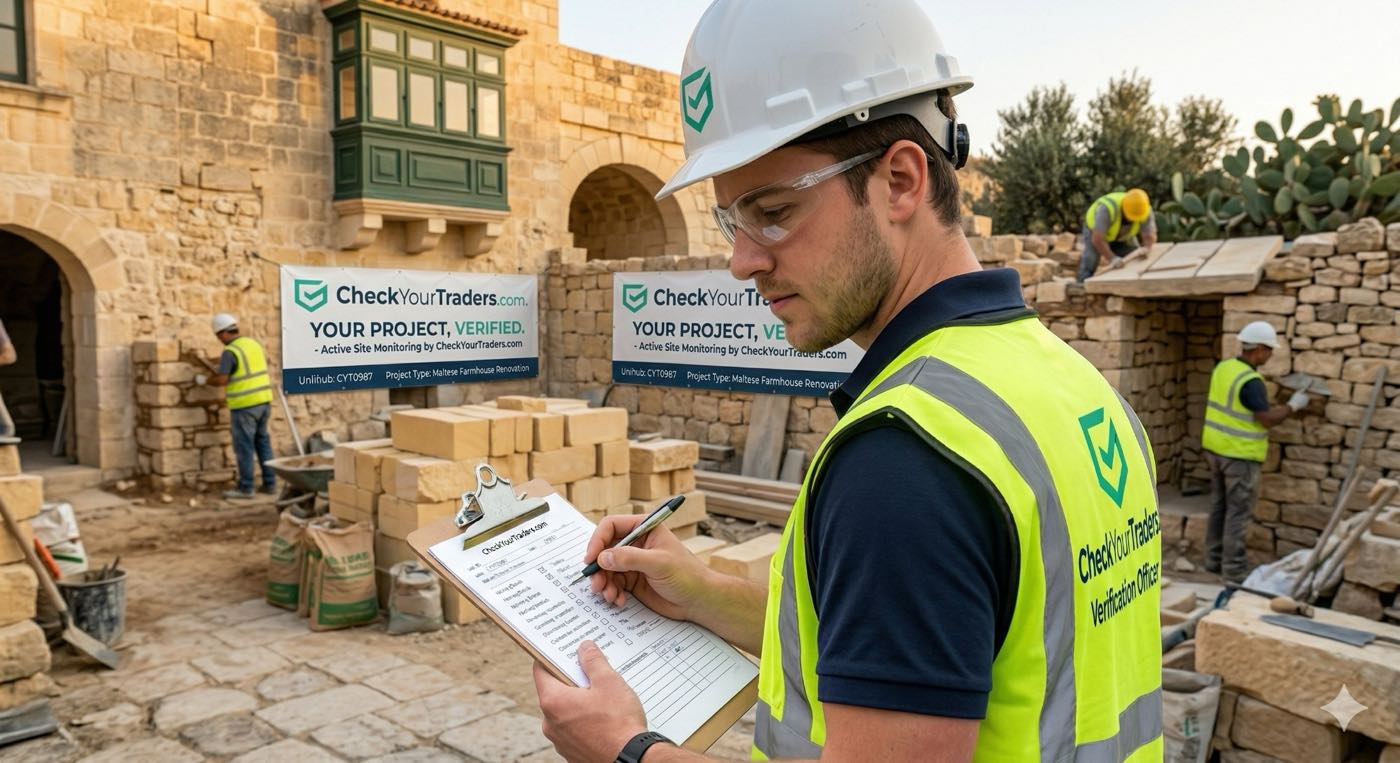
Most people buying in Malta sign the real agreement months before they get the keys. That document is the konvenju — the promise of sale. If you are coming from the UK, your instinct is to map it onto exchange of contracts, with completion to follow. The mapping is imperfect in ways that cost money, and the differences are written into the Civil Code rather than negotiated by your agent.
This is a reference article, not legal advice. The notary who publishes your deed is the person who should read your konvenju to you line by line.
A promise of sale is not a sale
Article 1357 of the Civil Code is explicit: a promise of sale or transfer of a thing is not equivalent to a sale or transfer. Nothing moves on the day you sign. You do not own the property, and you cannot start works in it as though you did.
What the article does say is that a promise to sell, if accepted, obliges the promisor either to carry out the sale or to make good any damages. Article 1360 applies the same rules to a promise to buy. So the obligation is real and it runs both ways — but it is an obligation to perform or to compensate, not a transfer of title.
That distinction matters most to shell-form buyers, because it answers the question everyone asks: can I send a measuring team in next week? Not as of right. Access before the deed is something the konvenju has to grant you, in writing, or it does not exist.
The konvenju has an expiry date, and the law supplies one if you don't
The parties fix the period. Failing agreement, article 1357 gives three months from the day on which the sale could have been carried out. When that period runs out, the promise lapses.
There is one way to keep it alive. Before the period expires, the promisee must call on the promisor by judicial intimation to perform the obligation. If the promisor still fails to do so, the demand must be followed by a sworn application filed within thirty days. Miss the window and the remedy goes with it.
Two practical consequences:
- The date in your konvenju is not a target. It is a deadline with a statutory consequence.
- If anything in your chain is slow — a bank, a permit, a search — the extension has to be agreed and documented before the clock runs out, not after.
The deposit: read the words, not the custom
Article 1359 of the Civil Code deals with earnest (caparra). Where earnest is given, either party may withdraw from the contract: the party who gave the earnest forfeits it, and the party who received it returns double. The article adds the qualification "saving any other usage".
What this does not tell you is whether the money you are handing over is earnest at all. A payment under a konvenju can be characterised in different ways, and the characterisation is a matter of what the particular document says. Do not assume your deposit is earnest. Do not assume the sum is a fixed percentage — nothing in these sources sets one. Ask your notary, before signing, which article your money sits under and what each party can do with it if the deal collapses.
The konvenju must be notified, with 20% of the duty paid up front
Article 3(6) of the Duty on Documents and Transfers Act is a validity rule, not an administrative formality: a promise of sale is not valid unless it is notified to the Commissioner within the prescribed time, together with a provisional payment of 20% of the duty chargeable on the eventual transfer.
So the konvenju is not only a commitment to buy. It is the point at which the first slice of duty leaves your account. Budget for it at signature, not at the deed.
The energy certificate has to exist before you sign, not after
This one surprises buyers routinely, because in practice the EPC is often treated as a last-minute item.
Regulation 13(3) of S.L. 623.01 requires the energy performance certificate to be shown to the prospective buyer and handed over to them before the promise of sale. Regulation 13(4) covers the case that applies to a great many Maltese purchases: where a building is sold before construction, a design rating EPC is attached to the promise of sale or the deed. The same regulation requires a new EPC where energy-relevant alterations are made, by notarial deed.
If the seller does not provide one, you are not stuck. Regulations 14(4) and 14(5) allow the buyer to commission an EPC and deduct the cost of it from the price.
For a shell-form buyer there is a second reason to care. A design rating describes an intended building. What you actually build — glazing, insulation, services — is what the finished rating will reflect. Keep the design rating with your file; it is a statement of what the property was sold as.
Non-residents: the permit carries a six-month clock
Where a buyer requires a permit under the Immovable Property (Acquisition by Non-Residents) Act, the Second Schedule to Cap. 246 imposes a condition on the permit holder: the acquisition must be effected within six months of the issue of the permit, saving any extension.
Read that against the konvenju timetable. The six months run from the permit, not from your signature, and not from the deed date you have pencilled in. If the permit is issued early and the deed is late, you can find the two periods out of step. Sequencing the permit application against the promise of sale period is a question for your notary at the time of signing, not afterwards.
Shell form: the konvenju is the document that defines what you are getting
Malta sells property in shell form as a matter of course, and buyers arriving from markets where "unfinished" means "needs a kitchen" tend to underestimate the gap.
The sources used here do not define shell form. There is no statutory list of what a shell-form handover includes or excludes, which means there is no default to fall back on if the contract is silent. The konvenju is the document that has to state it — what is in place at handover, what is not, and to what standard — and anything left to a verbal understanding with a developer is, in practice, unenforceable detail.
Before signing, it is worth having written answers to the simple questions: what exactly is delivered, in what condition, and when access for your own works begins. Everything downstream — your finishing budget, your programme, whether a Gozo site means ferry crossings for every delivery, whether a condominium's rules constrain the works you intend — is priced off that description.
What to have in hand at signature
- The EPC, shown and handed over before the promise of sale (or the design rating, for a property sold before construction).
- Confirmation of how the konvenju will be notified to the Commissioner and the provisional 20% duty paid.
- Your notary's explanation of how the deposit is characterised in your specific wording, and what article 1359 does or does not mean for it.
- A permit timetable, if Cap. 246 applies to you, aligned with the deed date so the six months do not expire first.
- A written description of the state in which the property is handed over.
Common questions
- Is the promise of sale the same as exchange of contracts?
- No. Under article 1357 of the Civil Code a promise of sale or transfer is not equivalent to a sale or transfer: ownership does not pass. What it does, once accepted, is oblige the promisor to carry out the sale or pay damages. The transfer itself happens on the deed.
- How long does a konvenju last?
- For the period the parties agree. Failing agreement, article 1357 gives it three months from the day on which the sale could have been carried out. After that it lapses, unless before expiry the promisee files a judicial intimation calling on the promisor to perform and, if the promisor still fails, follows it with a sworn application within thirty days.
- Do I lose my deposit if I pull out?
- It depends on how the specific konvenju characterises the money. Article 1359 deals with earnest: where earnest is given, either party may withdraw, the giver forfeiting the earnest and the receiver returning double, saving any other usage. Whether your payment is earnest, a part payment or something else is a question of the wording you sign, and your notary should explain which it is before you sign.
- Does the energy performance certificate have to exist before I sign?
- Yes. S.L. 623.01 regulation 13(3) requires the EPC to be shown to the prospective buyer and handed over before the promise of sale. For a property sold before construction, regulation 13(4) requires a design rating EPC attached to the promise of sale or the deed. If the seller fails to provide one, regulation 14(4)-(5) allows the buyer to commission an EPC and deduct the cost from the price.
What we could not establish
- The sources do not define what 'shell form' includes. There is no legal checklist of what a shell-form handover must contain; the konvenju is the only document that states it.
- Cap. 364 article 3(6) requires notification to the Commissioner 'within the prescribed time' but the time limit itself is set elsewhere and is not established by the sources used here.
- What happens to the 20% provisional duty payment if the promise of sale lapses or the deed never happens is not established by the sources used here.
- Which buyers need a permit under Cap. 246, and which acquisitions are exempt, is not established by the sources used here — only the Second Schedule's six-month completion requirement is.
- The sources say nothing about customary deposit percentages, who holds the money, or escrow arrangements in Malta.
- Planning Authority permit status, condominium rules and site access are not addressed by any of these sources, although they decide whether a finishing programme is feasible.
Sources
- Civil Code (Chapter 16 of the Laws of Malta), articles 1357-1360 — Laws of Malta / Office of the State Advocate · read 2026-10-05
- Duty on Documents and Transfers Act (Chapter 364 of the Laws of Malta) — Laws of Malta / Office of the State Advocate · read 2026-10-05
- Energy Performance of Buildings Regulations (S.L. 623.01) — Laws of Malta / Office of the State Advocate · read 2026-10-05
- Immovable Property (Acquisition by Non-Residents) Act (Chapter 246 of the Laws of Malta) — Laws of Malta / Office of the State Advocate · read 2026-10-05
Drafted with Claude — claude-opus-5, then read, corrected and approved by Neil Bennett before publication. We do not publish anything a person has not read.
Want this costed properly?
The calculator gives you a budget in a minute. A survey gives you a fixed price.
Book a free survey