
The ten trades in a Malta fit-out, and what each one actually does
The calculator lists ten trades in the order they are executed on a shell. Here is what each one actually involves, and why the sequence is not negotiable.
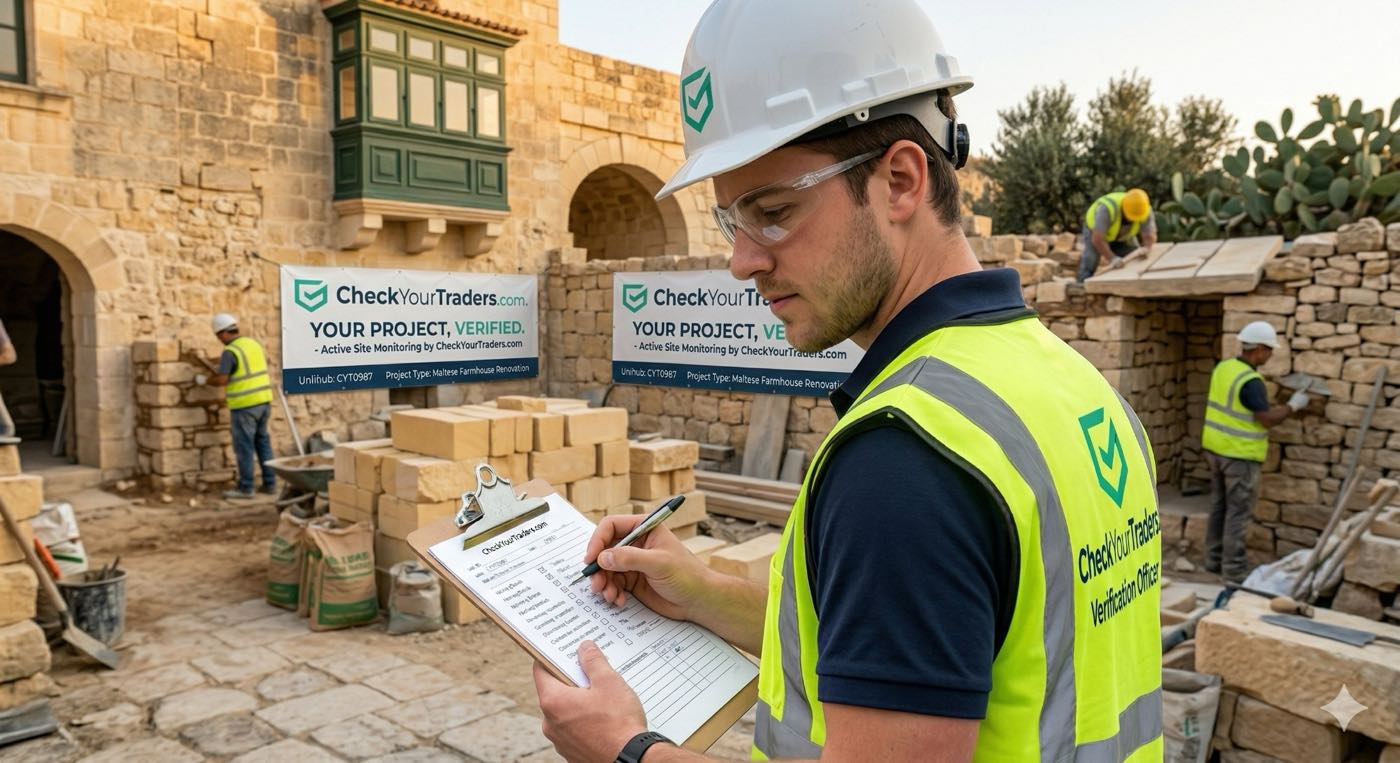
If you have just bought a shell in Malta, the calculator on this site probably looked like a list of ten things you were expected to already understand. It is not. It is a build sequence, written down. The ten trades — insulation, first fix electrics, first fix plumbing, gypsum and plastering, screed, external doors and windows, internal doors, floor and wall tiling, second fix electrics, painting — appear in the order they are executed, and that order is the single most useful piece of information on the page.
This article explains what each one covers, when it happens, and what depends on it. It deliberately does not repeat the rates. Those are on the calculator, they are the published numbers, and a prose summary of them would only go stale.
Why a shell needs all ten
Buyers arriving from the UK or elsewhere in the EU are usually used to a finished property being the default and a renovation being the exception. In Malta, shell form is the normal way property is sold. What you have bought is structure: walls, slabs, openings, and often very little else. Everything between bare blockwork and a place you can sleep in is the ten trades.
The important consequence is that a fit-out is not ten independent purchases. It is one continuous operation in which each trade either buries the one before it or sits on top of it. Skipping a line is sometimes reasonable. Reordering one almost never is.
1. Insulation
Insulation goes on first because everything else covers it. It is applied to the roof and, depending on the build, to walls, before any service runs or finishes exist. Malta's problem is heat rather than cold, and the consequence of getting it wrong is not a draught in February but a bedroom that will not cool in August and an air conditioning bill that runs for five months a year.
Nothing later in the list can compensate for it, and retrofitting it after plastering means undoing the plastering.
2. First fix electrics
First fix is the invisible ninety per cent of the electrical work: chasing channels into blockwork, running conduit, setting back boxes for every socket and switch, and pulling cable back to where the consumer unit will live.
This is the trade that forces your first hard decisions. Where the sockets go, how many, which side of the bed, whether the kitchen island is fed — all of it is fixed here, weeks before you own a kitchen. Once plastering closes the walls, moving a socket means cutting the wall open again.
3. First fix plumbing
The same logic, applied to water. Supply runs, waste runs, drainage falls, and the positions of every sanitary fitting are set now. Waste pipework in particular constrains what comes later: falls have to be achieved within the floor build-up, which means the plumber and the screed are arguing about the same few centimetres.
Move a WC after first fix and you are not moving a fitting, you are moving a soil pipe through a floor.
4. Gypsum and plastering
Plastering closes everything. It is the trade that turns a chased, conduited, pipe-laced shell back into flat surfaces, and it is the point of no return for the two fixes before it. Gypsum work also covers dropped ceilings and bulkheads, which is where air conditioning runs and recessed lighting get hidden.
Everything visual from here on assumes plaster is flat and true. Tilers and painters inherit whatever the plasterer left them.
5. Screed
Screed is the levelling layer between the structural slab and the finished floor. It buries any services running underfoot and establishes the final floor level in every room.
That level matters more than people expect. It determines the gap under internal doors, how thresholds meet between rooms, and whether external doors open cleanly. Screed is decided once, and door heights follow from it rather than the other way round.
6. External doors and windows
Apertures make the building weathertight, which is why they sit here: after the wet trades have finished throwing moisture around, and before the finishes that would be ruined by rain. They are also usually measured off the actual openings rather than the drawings, because openings move.
Two Malta-specific constraints attach to this line. Anything that changes the external appearance of a building may engage the Planning Authority, and in an apartment block the facade is generally common property, so the condominium — not you — has a say in what goes into the hole. Neither is a rate-card question, and neither is something to discover in week ten.
7. Internal doors
Internal doors come after plastering and screed because both determine the opening. Frames need a finished reveal to fix to; leaves need a known floor level to be cut to. Hanging doors before the floor exists produces doors that either scrape the tiles or float above them.
8. Floor and wall tiling
Tiling is the first trade whose output you will actually look at every day, and it is the one most sensitive to the quality of everything underneath. Floor tiles expose a bad screed. Wall tiles expose bad plaster. Tilers also need first fix to have been accurate, because a tap or a waste that emerges two centimetres off centre ends up permanently visible in a grout line.
9. Second fix electrics
Second fix is the visible ten per cent: sockets, switches, light fittings, the consumer unit, and testing. It comes after tiling so that faceplates land on the finished wall surface rather than being buried behind it or standing proud of it.
This is also where an error made at first fix finally announces itself, which is the practical reason first fix deserves more of your attention than it usually gets.
10. Painting
Painting is last because everything else damages paint. Tilers mark walls, electricians mark walls, doors get carried through corridors. Painting is the only trade on the list with nothing after it.
That position has a cost: painting absorbs every delay upstream of it. If nine trades each slip a few days, the painter — and your move-in date — carry all of it.
Reading the list as a programme
Three things follow from the order:
- Decisions front-load. The choices that are hardest to reverse (socket positions, sanitary positions, floor level) are made in the first five trades, before the project looks like anything.
- Sequence breaks are expensive. Every out-of-order trade means opening up finished work, which means paying twice for the same surface.
- Access governs everything in Malta. An apartment fit-out runs on the condominium's terms for deliveries, lifts, hoisting and working hours. On Gozo, every delivery involves a ferry, and materials cannot simply be sent for at short notice.
The calculator prices the ten trades. It does not price the decisions, the permits, or the waiting — and it does not pretend to.
Common questions
- Can I leave trades out of the list?
- Yes, and many buyers do — a shell sold with apertures already fitted does not need the external doors and windows line, and a buyer laying timber rather than tiles will change the tiling line. What you cannot do is reorder them. The ten are listed in build order because each one either buries or sits on the work before it.
- Why is painting last?
- Because everything else damages it. Tiling, second fix electrics and internal door hanging all mark walls. Painting is the only trade on the list that has nothing after it, which is why it absorbs the delays of the nine before it.
- Does the order of the ten trades tell me how long a fit-out takes?
- No. The rate card establishes the sequence, not durations, lead times or how far trades can overlap. Anyone giving you a programme is giving you their own estimate, not something published on the calculator.
What we could not establish
- The rate card establishes which ten trades a shell fit-out contains and the order they run in. It does not publish durations, lead times, or how much two adjacent trades can overlap.
- The rate card does not state what sits inside each rate — labour only, labour and materials, waste removal. VAT is the exception: the figures are stated to exclude it. This article therefore does not restate the numbers; read them on the calculator itself.
- Nothing in the source establishes a Gozo uplift, a ferry or delivery surcharge, or any difference in the rates between islands.
- The source does not say what a Maltese shell typically already includes. Whether your particular shell arrives with apertures, a screed, or capped services is a question for your contract of sale, not for a rate card.
- Planning Authority consent and condominium approval affect when some of these trades can start. The source does not cover permits, timescales or what triggers them.
Sources
- Turnkey.mt budget calculator rate card (js/main.js) — Turnkey.mt · read 2026-09-02
Drafted with Claude — claude-opus-5, then read, corrected and approved by Neil Bennett before publication. We do not publish anything a person has not read.
Want this costed properly?
The calculator gives you a budget in a minute. A survey gives you a fixed price.
Book a free survey