
What a turnkey contract actually covers
'Turnkey' is used loosely in Malta. Here is what it means in our contracts — one prime contract, one invoice, one point of contact, and 22 services that would otherwise be 22 separate conversations.
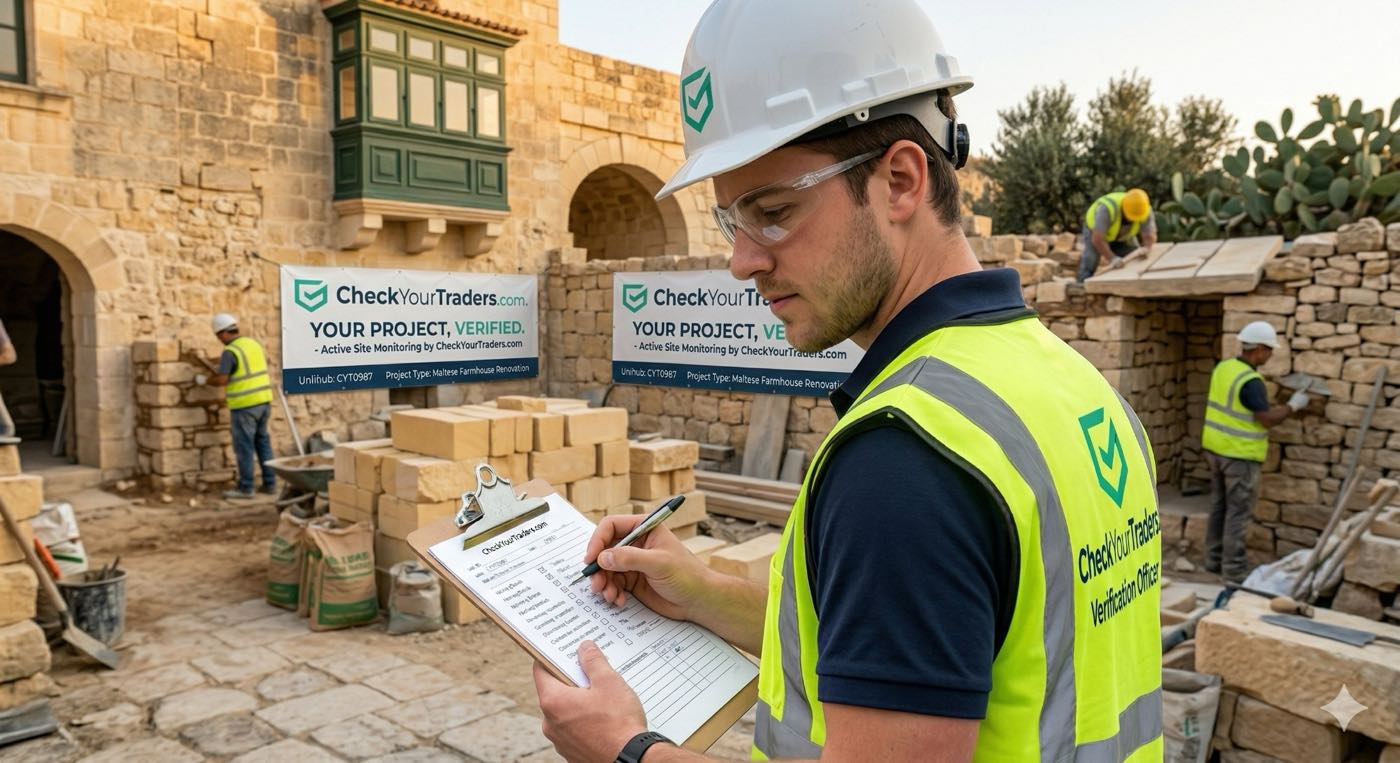
The word is doing too much work
"Turnkey" is used loosely in Malta. It appears in property listings, in agents' descriptions, in conversations at the notary, and it does not always mean the same thing twice. Sometimes it means finished. Sometimes it means finished and furnished. Sometimes it means the seller has put down tiles and stopped.
In a contracting context it means something narrower and more useful: a prime contract. One agreement covering the works, one invoice stream, one party accountable for the result. It is a statement about who carries the coordination risk, not a promise about what furniture arrives.
That distinction matters most to people who have just bought in shell form, which is the normal way property is sold here. A shell is structure, openings and services stubbed in. Everything that makes it habitable is still ahead of you, and it is not one job. It is many jobs that have to happen in a particular order.
What is inside the contract
Our services page lists 22 services and project types we deliver. They sit under a single contract. That is the whole point of the structure: you are not signing 22 things.
No single property uses all 22. A two-bedroom apartment in shell form draws on a subset; a townhouse conversion draws on a different subset; a commercial fit-out draws on another. The scope document for your property says which ones apply. What the number tells you is the range that can sit inside one agreement rather than being handed back to you as your problem.
Our budget calculator works at a finer grain. It breaks a fit-out into ten trade lines, each with its own published rate, so you can assemble a budget from the parts before anyone has visited the property. Those rates are on the calculator page. Use the figures there — not a number someone repeated to you, and not a rounded version of one.
Ten trades on one apartment is not unusual. It is ordinary. And ten trades is the exact scale at which the coordination problem becomes real.
The specific thing you stop doing
Here is what separate trade contracts look like in practice.
The tiler arrives and cannot start, because first fix is not complete in the bathroom. He is right. He leaves and takes the next job, which runs three weeks. The electrician is now finished and wants paying, and he is also right. The kitchen was measured against a wall that has since been furred out. Nobody lied to you. Every individual trade did exactly what they were contracted to do, and the gaps between them — the sequencing, the tolerances, the fact that one trade's finished work is the next trade's starting condition — belonged to nobody.
They belonged to you. That is the default position when you hold ten contracts.
Under a prime contract, the interface between one trade and the next is inside the contract rather than between contracts. When the tiler cannot start, that is not a conversation you have. It does not generate a decision you need to make from London on a Tuesday afternoon.
This is the single substantive thing a turnkey arrangement buys. Everything else — the invoice, the contact — is administration. The coordination is the product.
One invoice, one point of contact
The commercial version of the same idea. One contract produces one invoice stream rather than ten, which means one set of payment discussions and one reconciliation at the end. One point of contact means one number to call regardless of which of the ten trades is currently on site.
For overseas buyers this is usually the practical driver. If you are in Malta three weekends a year, ten relationships is not a workload you can carry, and the deficit shows up as delay rather than as a visible argument.
What the sources here do not settle
This article is built from two sources: our services list and our calculator's rate card. They establish scope and rates. They do not establish a number of things a careful buyer will want in writing, and it is more useful to name them than to fill the space with assurances.
They do not establish who handles Planning Authority applications, or whether permits sit inside the contract sum or alongside it. Works to Maltese property can require permits, and the question of who applies, who pays the fees and who carries the delay if an application is refused should be answered in your contract, not inferred from a services page.
They do not establish how condominium consents are handled. If you have bought an apartment, works are bound by the condominium rules and by the deed. Access to common parts, use of the lift for materials, permitted working hours and noise restrictions are all live constraints, and none of them are established by either source here.
They do not establish anything about Gozo. Every delivery to a Gozo project crosses by ferry, and that is a real constraint on materials logistics, but whether it changes the contract commercially is not something these two sources answer.
They also do not establish programme duration, payment structure, defects liability after handover, or whether furniture falls inside a standard scope. Ask. All four are reasonable things to have written down before signing, and none of them are settled by the word "turnkey".
What you should still expect to do
A prime contract does not make you a spectator. You still choose finishes, and those choices sit on the critical path — a tile selected late is a trade standing idle. You still sign off variations. You still make the decisions that only the owner can make.
What changes is that the decisions arrive as decisions, framed and sequenced, rather than as ten trades independently discovering that you are unreachable.
Reading a turnkey offer
Whatever you are being offered, and by whom, the questions are the same:
- Is this one contract, or several presented together?
- Which services from the list apply to my property, and which do not?
- Who is responsible when trade B cannot start because trade A is late?
- Is the price fixed, or remeasured against actual quantities?
- Who applies for permits, and who carries a refusal?
- What happens after handover, and for how long?
Our services page answers the first two for our own scope. The calculator gives you the rates to build the budget. The rest belongs in your contract document, in writing, before you sign — which is true of any arrangement, and true regardless of what the word on the letterhead says.
Common questions
- Does 'turnkey' mean the property comes furnished?
- Not automatically. Turnkey describes the contracting structure — one prime contract covering the works — not a fixed shopping list that always ends at sofas and bed linen. Our services page lists 22 services we deliver; what applies to your property is agreed in your scope document. If furniture matters to you, ask for it to be written in or written out explicitly, because the word itself does not settle the question.
- How many trades are involved in finishing a shell apartment?
- Our budget calculator breaks a fit-out into ten trade lines, and the services page lists 22 services across all our project types. A single flat will not use all 22, but ten separate trades on one small apartment is normal, and each one has to arrive in the right order behind the last.
- What does 'one point of contact' actually change for me?
- It moves the coordination problem off your desk. With separate trade contracts, when the tiler cannot start because first fix is incomplete, both are telling the truth and neither is responsible for the gap — you are. Under a prime contract the sequencing between our trades is our obligation, not something you have to referee from another country.
- Are the calculator's rates the price of my job?
- The calculator publishes our rates per trade so you can build a budget before anyone visits. It is a budgeting tool working off areas and specifications you enter, not a priced contract for your specific property. Use the figures shown on the calculator itself — do not work from numbers quoted second-hand elsewhere.
What we could not establish
- The sources establish that 22 services are delivered under one contract, but not whether each is self-performed or subcontracted by us — the contracting structure the client sees is what is documented, not the labour structure behind it.
- Neither source establishes who files with the Planning Authority, or whether permit applications sit inside the contract scope or alongside it.
- Neither source establishes programme durations, lead times, or the sequence in which the ten fit-out trades are scheduled.
- Neither source establishes payment terms, stage payments, retention, or whether the contract sum is fixed or remeasured.
- Neither source establishes a defects liability or warranty period after handover.
- Neither source establishes whether Gozo projects carry a delivery or logistics adjustment, despite every material crossing by ferry.
- Neither source establishes whether furniture, white goods or soft furnishings fall inside a standard scope.
- Neither source establishes how condominium consents or common-part access are handled contractually.
Sources
- Turnkey.mt services — the 22 trades and project types we deliver — Turnkey.mt · read 2026-09-02
- Turnkey.mt budget calculator rate card (js/main.js) — Turnkey.mt · read 2026-09-02
Drafted with Claude — claude-opus-5, then read, corrected and approved by Neil Bennett before publication. We do not publish anything a person has not read.
Want this costed properly?
The calculator gives you a budget in a minute. A survey gives you a fixed price.
Book a free survey