
If the budget is tight, spend it in this order
A shell needs finishing in a fixed order, and money spent out of that order is money spent twice. This is a sequencing guide: what has to be right before it is covered up, what stays reachable, and what can be left out entirely.
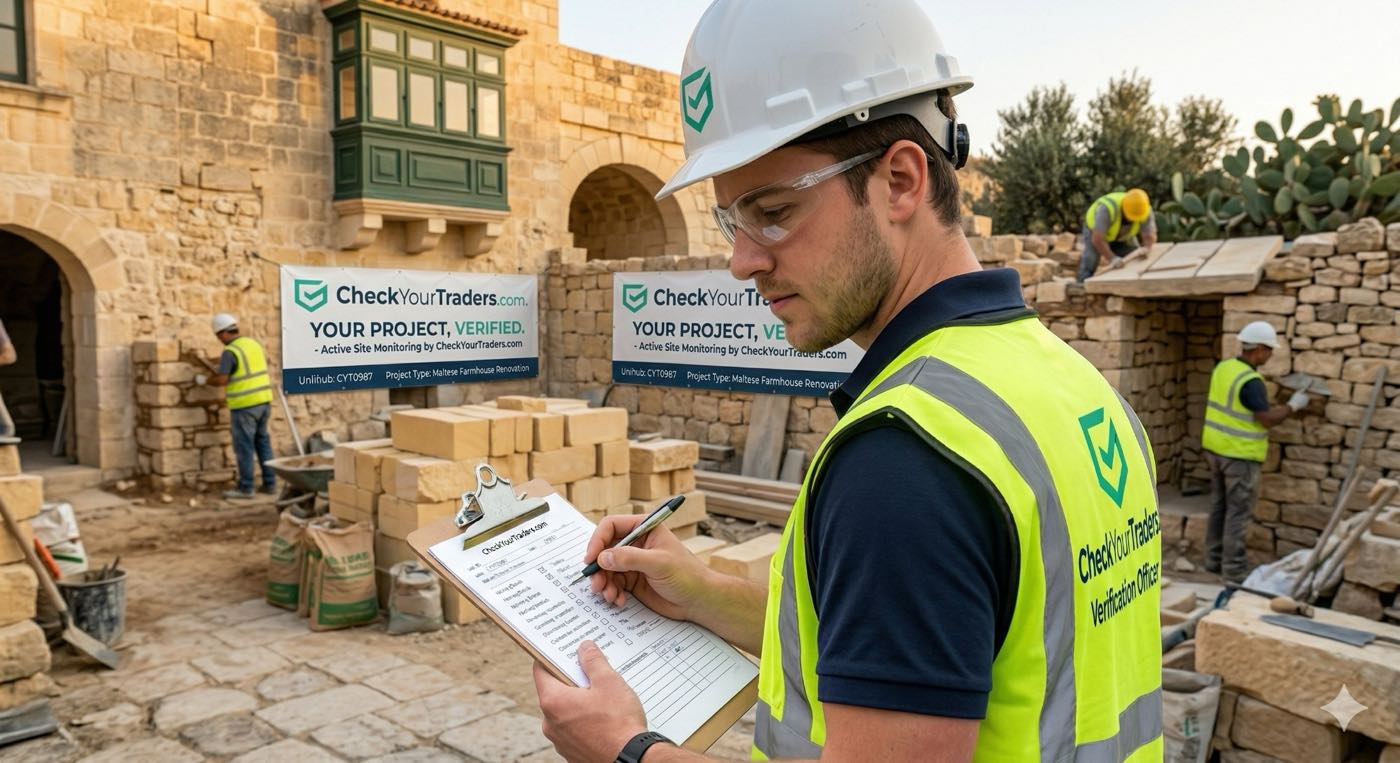
Most people buying in Malta buy a shell. That is the normal form of sale here, not a discount or a distress case, and it means the purchase price and the habitable price are two different numbers with a whole construction project in between. British and other EU buyers often arrive expecting something closer to a finished flat with a tired kitchen. What they get is blockwork, apertures of some description, and a floor slab.
The useful question for anyone with a fixed and insufficient amount of money is not which trade is most important. It is which decisions get covered up. Finishing a shell runs in a fixed order — the turnkey.mt calculator lists the shell trades in build order precisely because they cannot be reshuffled — and that order determines what you can revisit later and what you cannot.
Tier one: the things that get buried
These are the items where a cheap decision now is not a saving. It is a deferred demolition bill.
Insulation
Insulation goes in before the surfaces that hide it. Once plaster, screed and finishes are on, adding it means taking those back off, or losing internal dimensions to an applied layer. There is no version of retrofitting insulation that costs only the price of the insulation.
This matters more in Malta than buyers from northern Europe expect, and for the opposite reason. The problem is not a January heating bill. It is August, and a masonry building that has absorbed heat all day and releases it all night into a bedroom you are trying to sleep in. An uninsulated shell is comfortable with enough air conditioning running for enough hours, which is a running cost you pay every summer for the life of the building.
First fix electrics
First fix is the cabling and containment inside the walls and under the floor. What you are actually buying at this stage is not brand-name accessories — it is quantity and position. Circuit count, socket positions, where the data runs go, whether there is provision at the consumer unit for things you might add later.
The fittings on the ends of those cables are tier two. A basic white socket can become anything you like in five years with a screwdriver. A socket that does not exist requires a chase in a plastered, painted wall.
First fix plumbing and drainage
The same logic, with worse consequences for getting it wrong. Falls on waste pipes, positions of soil stacks, where the wet rooms are: these are set early and fixed by the screed and the tiling above them. Moving a bathroom after the fact is not a plumbing job, it is a demolition job with a plumbing component.
Sanitary ware itself — the WC, the basin, the taps — is not in this tier. Those are swapped out later without touching anything structural.
Screed
The screed is the line in the project where everything below it stops being accessible. It is the last moment at which buried services are cheap to alter, and the first moment at which they are expensive. Anything you might ever want under the floor needs to be decided before the screed goes down.
If the budget conversation has to happen at one point in the programme, this is the point.
Tier two: reversible, at the price of disruption
These items are replaceable later without touching the fabric of the building. Replacing them is unpleasant — dust, a room out of use, furniture moved — but it is not structural, and nothing buried gets disturbed.
- Tiling and floor finishes. A cheaper tile now does not compromise anything under it. Changing it later means lifting and re-laying over a screed that is already there and already correct.
- Internal doors. Frames and leaves. Entirely a later decision if the openings are formed.
- Second fix fittings. Sockets and switch plates, light fittings, taps, sanitary ware, shower screens, ironmongery. All of it unscrews.
- Kitchen and fitted furniture. Provided the services arrive at the right positions — which is a tier-one decision — the furniture in front of them is an independent purchase, made whenever you can afford it.
The honest trade-off here is that living with tier two at entry level is visible. It looks like an unfinished home because the things you can see are the cheap things. That is uncomfortable, and it is also the correct place to be uncomfortable.
Tier three: can simply wait
External works are the clearest case, and the rate card says so plainly rather than by implication. In the turnkey.mt calculator, villa external works are zero at Basic. That is a real datum, not a missing line. At the entry specification, the pool, the landscaping, the yard treatment and the external finishes are not costed at all, because they are not part of making a building habitable.
Nothing in the external works depends on being done before the interior. It is the one category where waiting costs you nothing except the use of the outdoor space.
Malta-specific frictions worth factoring in
Three things change the calculation here in ways that home-country instincts do not cover.
The Planning Authority governs permits. Anything that alters the envelope, the apertures or the footprint sits in a permitting process with its own timeline. That is an argument for making envelope decisions early, in tier one, rather than discovering later that a change you assumed was cosmetic is not.
Condominium rules bind apartment works. In a block, common parts, façade elements, risers and service routes are not yours to alter unilaterally. Work that would be a private decision in a house becomes a collective one here. Again, this pushes the difficult decisions early.
Gozo means a ferry for every delivery. Every material movement, every returned wrong item, every forgotten box carries a crossing. That makes the cost of changing your mind mid-project higher in Gozo than in Malta, and it strengthens the case for settling buried decisions before the trades are on site rather than during.
How to use the calculator against this
The budget calculator runs the shell trades in build order. Read it as a timeline as well as a price list: everything above the screed line in that sequence is a decision with a deadline, and everything below it is a decision you are allowed to postpone.
If the total comes out above what you have, the correct response is to reduce the specification of the tier two and tier three items and hold tier one at the level you actually want — not to spread the shortfall evenly across every line. Spreading it evenly is the instinct, and it is the expensive one, because the portion of the shortfall that lands on first fix and insulation is the portion you will pay for twice.
One thing this article will not do is tell you what share of the budget belongs to each tier. There is no published basis for such a split, the honest answer varies enormously by property, and a made-up percentage would be worse than none.
Common questions
- If I can only afford part of the work now, which part should it be?
- The part that ends up underneath something else. Insulation, first fix electrical containment and cabling, first fix plumbing and drainage, and the screed all disappear behind or beneath finishes. Reaching them again means removing whatever was laid on top. Finishes that stay on the surface — tiling, internal doors, sanitary ware, light fittings, kitchens — can be changed later at the cost of disruption rather than demolition.
- Can I add sockets or move a bathroom after the screed is down?
- You can, but not cheaply, and the cost is not mainly in the new cable or pipe. It is in chasing walls, breaking and recasting screed, and in re-doing every finish that sat above the work. That is why first fix decisions — how many circuits, where the outlets go, where the wet rooms are — are worth settling before the floor closes over them, even if the fittings themselves are the cheapest ones you can find.
- Is it normal for a Maltese finishing quote to include nothing for external works?
- At the entry specification it can be, and that is not an oversight. In the turnkey.mt calculator the villa external works figure is zero at Basic. Pools, landscaping and yard treatments sit outside the entry specification entirely, which reflects how they behave on site: they are deferrable in a way that buried services are not.
What we could not establish
- The rate card does not price the cost of retrofitting — breaking up screed, re-chasing walls, replacing finishes — so there is no published figure for what deferring first fix actually costs you later.
- It does not state insulation thicknesses, U-values or specification, so 'insulation' as a budget line cannot be compared against a performance standard from the rate card alone.
- It does not separate labour from materials on any trade, so a reader cannot tell which lines move with material choice and which move with time on site.
- It does not establish Planning Authority fees, condominium approval costs, or any Gozo delivery premium. Those are real costs on many projects and nobody publishes a general figure for them.
- It does not give a recommended proportion of budget per trade, and this article does not invent one.
Sources
- Turnkey.mt budget calculator rate card (js/main.js) — Turnkey.mt · read 2026-09-02
Drafted with Claude — claude-opus-5, then read, corrected and approved by Neil Bennett before publication. We do not publish anything a person has not read.
Want this costed properly?
The calculator gives you a budget in a minute. A survey gives you a fixed price.
Book a free survey